

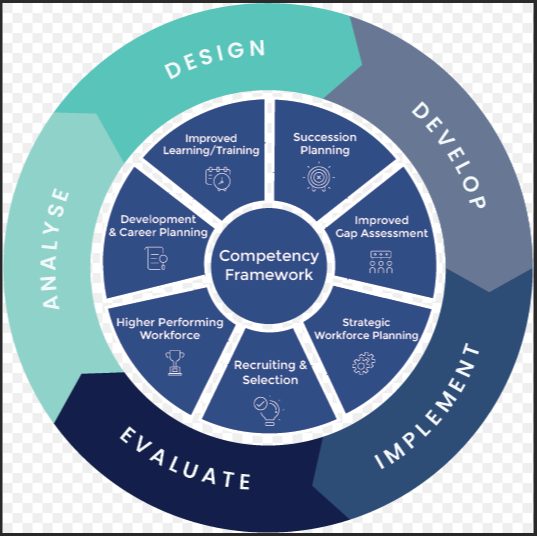
Workforce Development Example| Skillmaps
The work I performed creating skill gap menus and salary training development plans was very rewarding for me. I knew I wanted to continue this work. When the company I was working for decided to eliminate their Training and Development Team, I began a journey to find a position that would allow me to continue this work in a similar capacity.
When my previous manager posted a position for Corporate Training Coordinator at another local automotive manufacturing company, I knew before I finished reading the job description that this was it. When I was hired for this new role, I knew I could jump right in and continue the work this team had already begun. The skillmap project was in its very early stages. I was asked to review the shell, build it up, refine it and make it something comprehensive, IATF compliant and include development.
When I started in the role in June 2025, Salary roles had a handful of curriculums created in the LMS, but there were over 240 roles that needed something. There were several IATF findings for not having a documented process for identifying skill gaps on the salary side.
30 days into my employment, I was promoted to Lead Training & Development Specialist. I now had 6 T&D Specialists reporting to me, to be able to use on this skillmap project.
By September, our team played a critical role in restoring compliance, preventing non-conformances and protecting customer trust. Combining the two major components of Manufacturing Training Checklists for hourly roles, which my team was responsible for, and the skillmap project for the salary side, enabled myself and my team to play a central role in the enterprise recovery initiative that successfully restored IATF 16949 certification across 12 manufacturing facilities. This helped reverse supplier disqualification risk and safeguard OEM customer status.
The skillmap initiative even received recognition from the IATF auditor on site, commenting that she had not ever seen such a comprehensive process in all her years of auditing manufacturing companies and was proud of the L&D Team responsible for it.
Skillmap Process
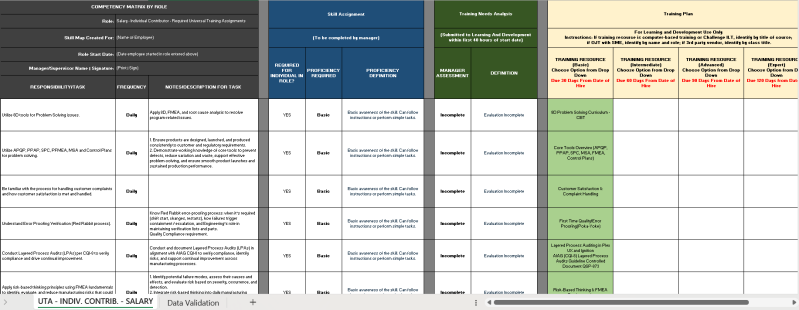
Below is an example of a portion of a Skillmap I created for the role of < > as part of the process to identify skill gaps within a given salary role. There are four sections to the Skillmap, identified below:
- Competency Matrix by Role - This section identifies all the required tasks and responsibilities of a given title, and the frequencies they occur. These tasks and responsibilities are comprised of required controlled documents and trainings for the role pulled from transcripts, previously built role-based curriculums, Quality-recommended requirements, and individuals' suggestions from interviews. An AI job analysis is also conducted, adding tasks pulled from individuals in the same role across the industry.
- Skill Assignment - This section identifies the required proficiency the team member in the role must achieve after the training is completed. It also serves a second purpose, an individual requirement, which is identified at the custom map level. Custom maps are created from the template after the template is approved at top leadership level.
- Training Needs Analysis - This section is determined by the manager of the individual in the role. When the custom map is created, the manager identifies the individual's current level of competency prior to the training plan being launched.
- Training Plan - This section identifies the curriculum, or role-based training plan, to launch in the LMS. Once this happens, the portion of the training plan that the individual has not yet completed identifies the skill gaps. The gaps are closed once the individual completes the trainings.
The Skillmap serves several purposes:
- To help managers identify requirements for each job title as they hire new team members
- Allows the manager and team member to view the individual's job title requirements together to identify the skill gaps and training needed
- Provides a way for team members to review development opportunities with their managers
- To present in a quality audit (customer, 3rd party, internal) as part of a documented process for identifying skill gaps

Universal Training Assignments
Most companies have industry-standard requirements for roles. For the automotive industry, there are IATF, Customer, and OSHA/ISO standards that must be met in order to maintain current business contracts and to gain new contracts. These standards are quality and safety driven.
In 2025, Human resources, IT, Internal Audit and Quality teams at Challenge came together to identify awareness-type industry standards that would apply to every role in the company. These Universal Training Assignments, or UTAs, would satisfy all compliance requirements for internal and external audits, as well as customer requirements.
Our LMS administrator and I took these requirements and created 3 training plan package types, based on type of role: hourly, salary or manager. We then divided these required "awareness" trainings to be delivered through the LMS quarterly over the next year. This is to ensure they get delivered and completed the same time every year, as well as allow team members time to complete them and not have all of them due at once. I made this suggestion due to having experience in my previous role with higher completion rates based on spreading out the trainings similarly.
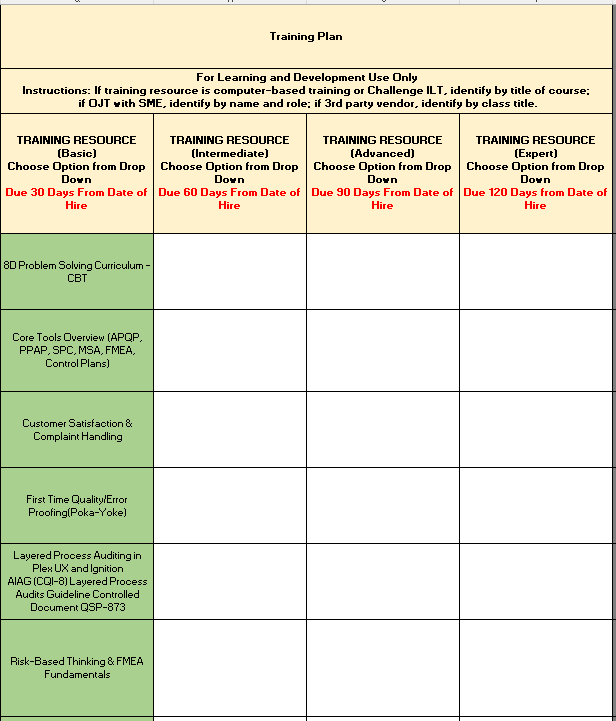
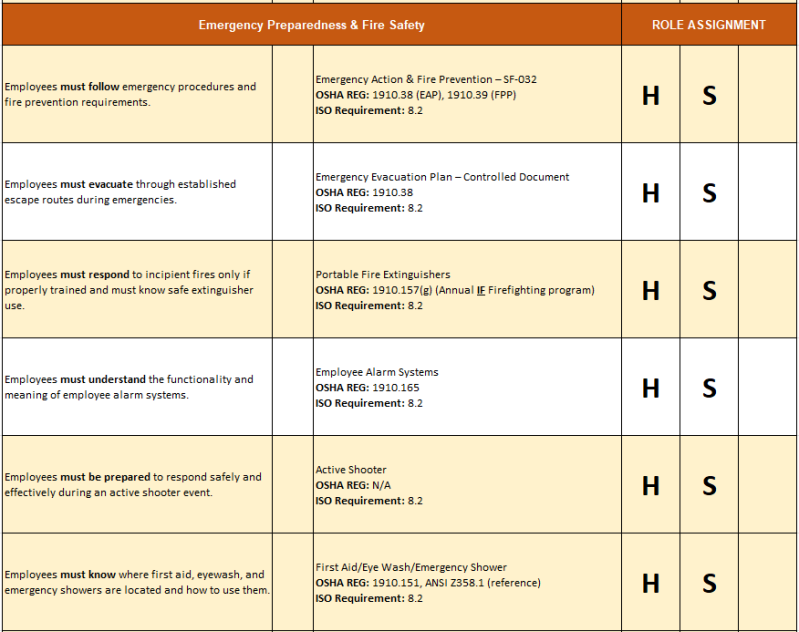
On the left, you see an example of a portion of an extra tab we add to the skillmap templates specific to the UTA group for all salary team members.
We first finalized the total list of awareness trainings. We added tasks and descriptions to each, then divided them into the 3 role types: Hourly, Salary and Manager. Examples shown here are from the Human Resources and OSHA awareness requirements.

After dividing up into role groups and launch quarters, I added them into their own UTA tabs, one for each role type. These get added to the respective skillmap templates for the role type.
This means when the skillmaps are complete, there are 2 tabs, one for the role-specific required trainings and another tab for the UTA group that goes with that role-type.
Once per year, or at performance reviews, the skillmaps get reviewed: manager reviews with their direct hires and the template is reviewed with top leadership for any updates necessary.
Create Your Own Website With Webador